Trans. Tuesday: We Survived The Parade of Trains

Just barely.

RL Fifield 2013.

RL Fifield 2013.

Dr. V. indulged my whim to visit the assemblage of historic trains at New York’s Grand Central Terminal last weekend, May 11, 2013: National Train Day. For a moment there, I felt like we were part of a cheesy musical movie, swirling in a line coiling through the crowded station. A lame 3-person flash mob-ette broke out next to us – it was a bit underwhelming, but they looked like they were having a good time. Station personnel was super nice in managing the crowds as we waited in overheated passages and then were held on air-conditioned modern Metro-North trains on Tracks 41-42, prior to our procession to Tracks 37-40. It took about 2.5 hours to get there, and about another hour to see the trains, including snaking through the interiors of sleeper and club cars.

The interior of a sleeper car bedroom.

The interior of a sleeper car bedroom.

The cars were either held by private concerns, individuals, or rail historical societies. There was a real disconnect between the well-renovated and the “cleaned up enough with my own personal taste so we can run dinner trains/rent it out” set. I wanted to see spit and polish down to the detail historic restorations, but not all car owners do that. It was a rather intimate tour of those cars owned by private individuals. You saw their toothbrushes in the bathroom, their Mr. Coffee in the galley, their plastic shower cap in the stainless steel shower. While some cars evoked 1950s glamour, others might have well been your grandmother’s living room.


Too many people. RL Fifield 2013.

Too many people. RL Fifield 2013.

The hands-down star of the group was the Kitchi Gammi Club from 1923. A classic Pullman car, the pull down bunks, vaulted ceiling, and windowed lounge with leather furniture reeked class. The New York Central 20th Century Limited Observation Car owned by Star Trak was obviously sleek. Other cars were more utilitarian, such as the 1950s sleepers with painted metal finishes. The past was not all luxury, and coach class cars are unlikely to get preserved. This cheapest means of travel would have been the mode of transportation with which most rail goers were acquainted. The tight corridors brought the intrigue of North by Northwest to mind, but several uncomfortable tour-goers made me think that many modern Americans are not used to the tight spaces rail cars require.

Check out the American Association of Private Railroad Car Owners. It was kind of fun to see a Harvey Girl reenactor walking around. (see my post on Harvey Houses here)

Harvey Girl reenactor. RL Fifield 2013.

Harvey Girl reenactor at Grand Central Terminal. I was inside a guest car on tour. RL Fifield 2013.


To Balto.

This weekend takes me to the American Alliance of Museums meeting in Baltimore. I write The Still Room on the weekend so this week I’ll have to pass. May/June is a traditional month for museum conferences, so please hang with me while I run the gauntlet.

I wish I were taking B&Os Royal Blue, but alas, the crash in Connecticut has disrupted Amtrak service and Mrs. A. and I will be taking to the highways. See you in Baltimore.

The Royal Blue, Baltimore & Ohio publicity photo, Thomas Viaduct, Maryland, 1937. Photo: Wikipedia.

Maiko-san – Block Print at LACMA

I love edgy 20th century block prints of traditional Japanese subjects, like this print Two Maiko by Sekino Jun’ichirō. He uses the regimented trappings of a maiko’s (apprentice geisha) appearance abstractly, placing the young women in juxtaposition to each other. You might only see these women positioned like this  if they were dancing (maiko means “women of dance”), yet the artist positions them in a streetscape, the only place where outsiders to this world might catch a glimpse of these elusive artisans. Overhead hangs a paper lantern. The designs on these lanterns are specific to particular Gion geisha districts; the chained dots on this lantern denotes that these women belong to either the Gion Kobu or Gion Higashi districts.

The artist does not aim to represent the maiko’s traditional dress faithfully. Rather, he uses the parts of their dress for presentation of various patterns of his craft. The top maiko has the three-tined stencil on her neck of celebration, generally worn only for omisedashi, or the celebratory start of business. This maiko doesn’t wear the black formal kimono of that event; instead she wears contrasting, richly patterned fabrics, as if she were on her way to an o-zashiki, a type of party that comprises the major work of maiko and geiko.

I love the expression on the lower maiko’s face. Her face does not depict the sweet teenager seen in so many maiko photographs. It looks more determined, closed, and tired, in contrast to the colorful raucous circles depicting the hair ornaments at the top of her head and the energy of the wings depicted on her kimono, pouring over her arms.

Two Maiko. Sekino Jun’ichirō. LACMA

Museum Monday – Raising the Visibility of Collection Care

Next Sunday, I will be speaking at the American Alliance of Museum’s conference in Baltimore, Maryland. The American Institute for Conservation’s Collection Care Network will be hosting a flash session, facilitating discussions with the audience about three important topics in collection care: raising the visibility of collection care in institutions, creating partnerships with facilities staff to further collection care goals, and guidance for working with consultant conservators, especially for small institutions.

I’m guiding the discussion on raising visibility of collection care. As a collections manager, I’m particularly interested in not just running the gauntlet of exhibition and publication projects and throwing my body in front of harm’s way to protect my collections. I want to target the bigger issues. How do we turn messages such as “the art is dusty! you need to dust more!” into “what factors can we change to reduce dust in the galleries?” Dusting artwork is abrasive to often delicate surfaces. Removing carpet from gallery spaces, using HEPA vacuums to clean the spaces, and routine regular maintenance of HVAC systems can reduce dust deposition on artwork.

Of course, in order to broach those subjects, we need to raise the visibility of collection care. It’s important for staff and/or departments undertaking this mission that it’s not a sprint; it’s a marathon. Here are a few ideas to start fostering a greater understanding of collection care in your institution:

  • Try starting a meeting or discussion group at your institution about collection care. I did this at my institution in 2005. Before that time, the phrase “collection care” was not used. Now it is frequently used. People may not always understand exactly what collection care is, but bringing the phrase into conversation allows for the idea to grow and be shaped within the institution.
  • Ask administration for a short meeting every month about collection care. Hit a different topic every time. Bring in additional staff who have a stake in collection care. Suggest a comprehensive survey that can provide that administrator with an overall, digestible snapshot of collection care, like the Benchmarks in Collection Care survey from the Museum, Libraries, and Archives Council in the UK. Use the results to guide your conversations.
  • Have a big picture meeting with collection managers and other staff. Use it as a platform to talk about needed training, or challenges they are facing. Make collection care a necessary goal, not just “in between projects” work. Collection care is not a luxury.
  • Build out from your emergency program – if  you are talking about rare and catastrophic risks to collections, extend that discussion to talk about the constant everyday risks collections are facing, including dust, handling, light exposure, and lack of storage supports leading to distortion.
  • Sneak it into the health and safety or inventory section of your institution’s audit. I heard this suggestion at a British Library preservation conference. Audits are where institutions like to shine, so it’s a way to introduce goals or suggest projects that gets administration set the best practices bar higher. 
Share your ideas with me!


Working with the Dixon Ledgers, Port Royal, Virginia

My personal research focuses on the dress of indentured and enslaved servant women from 1750-1790. While I was in DC for work recently, I was able to slip over to the Library of Congress for a couple of hours and download images from a selection of Edward Dixon’s ledger books. Dixon was a merchant in Port Royal, Virginia, a town on the Rappahanock River in Caroline County. I’m looking for information about the sale of textiles for indentured and enslaved women, as well as owners of women who I have cataloged in my Runaway Clothing Database (here’s an earlier post on that project).

I just started looking at the ledgers last night, and they are a real treasure. Not only does the ledger I was looking at record costs for the making of shoes, shirts, and suits of clothes for slaves, it sometimes specifically records purchases of textiles for individual slaves. I’m working on the methodology for working on these materials while I’m at my research fellowship at the Winterthur Museum, Library, and Garden in July.

Here’s a snippet from that ledger – apologies I can’t show a larger image. Thomas Turner’s estate made the purchase on Nov. 8, 1768 of 2 yards Cotton at 4s. a yard and 2 yards brown linen at 2s. a yard “for Negro Mary.” See the Library of Congress finding aid here.


Edward Dixon Ledger.

Edward Dixon Ledger. Box 24, Reel 8. Library of Congress. Apologies for the rasterization.


Wanderlust Wednesday: Tucson

The end of March found my mom and I in southern Arizona. My great uncle Mr. B has a cattle ranch outside of Tucson, where he set up business in 1952 (read a post about the nearby historic site The Empire Ranch). Before we headed out to the ranch, Mom and I headed downtown to get some lunch.

Tucson’s wild west past certainly got trounced by 1970s architecture, but there are efforts to restore its early 20th century character. Here are a few quick snapshots from the eerily perfect Western Deco Hotel Congress.  We had lunch at its restaurant, the Cup Cafe.

Tucson is bringing back its streetcar lines –  this has torn up and closed a number of downtown streets, making it a bit difficult to navigate currently. But my uncle, a member of that old breed of Western Republican (fiscally conservative, socially pretty liberal for age 93), after bashing health care and government intervention, thought that installation of the streetcars was progress. Progress, c. 1910. Kudos for bringin’ it back, Tucson.

IMG_1187

Tucson Streetcar track work. RL Fifield

Hotel Congress, Tucson, AZ. Photo: RL Fifield.

Hotel Congress, Tucson, AZ. Photo: RL Fifield.

IMG_1184

Hotel Congress. RL Fifield.


RL Fifield.

RL Fifield.

IMG_1185

The hotel switchboard. RL Fifield.


Transit Tuesday: Parade of Trains at Grand Central Terminal

Next weekend is GCT’s Parade of Trains (May 11/12, 2013), New York City’s contribution to Amtrak’s National Train Day program (so if you don’t live in NYC, check out an event near you). Last year we were floored by the ribbon of well-behaved children that snaked through the terminal waiting to tour the elder statesmen of rail travel, parked on one of the out of the way tracks (read my post here).  This year, cars from the 1920s-1950s will be lined up on Tracks 34-37, including one from the iconic New York Central’s 20th Century Limited. It’s certainly an event geared toward kids given the event schedule, but I’m sure a fair amount of rail-fan adults will be there as well.

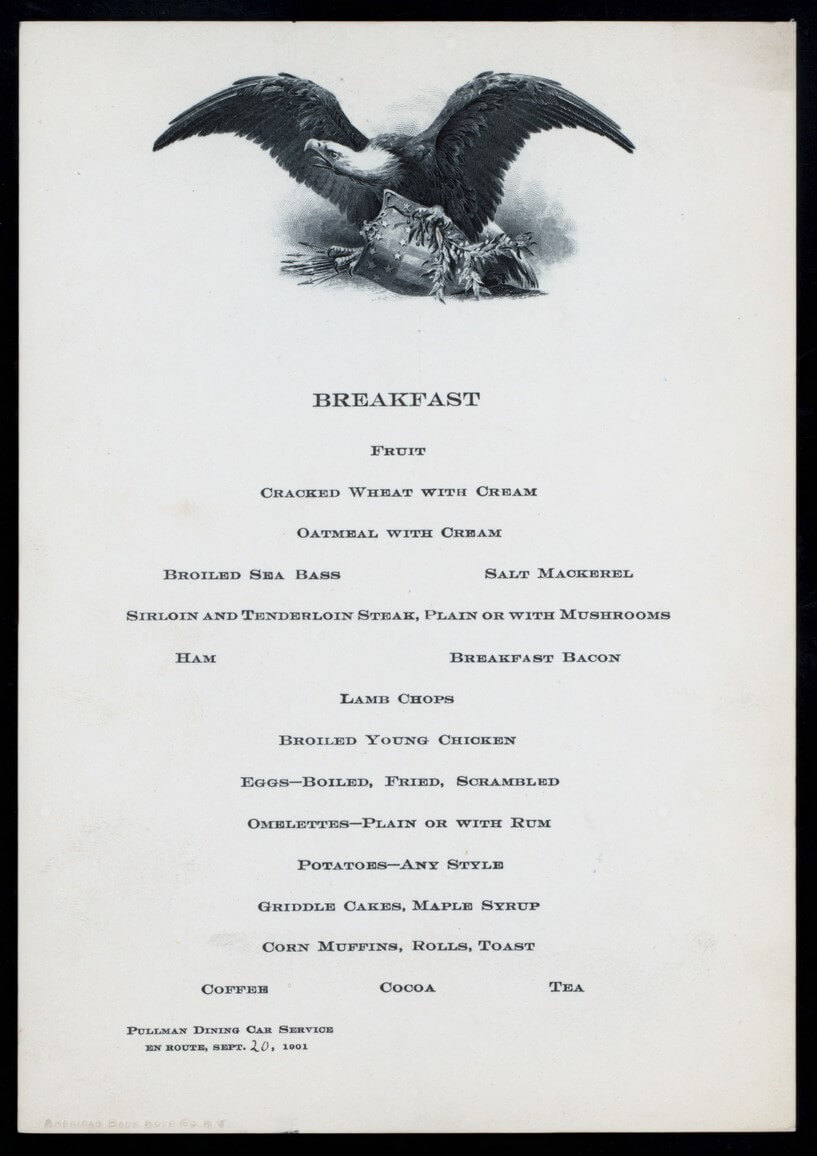
Could we please bring back class like this?

Photo: cruiselinehistory.com